What My Left Hand Taught Me About Peace Leadership
By: Mandla Simelane, African Left Handers Foundation
Mandla Simelane is a South African peacebuilder working across educational institutions and non-governmental organisations, with a particular focus on marginalised communities. His scholarly and practice-based work sits at the intersection of embodied marginality, inclusive practice, and humanising pedagogies, contributing to approaches that centre dignity and social justice in education and community engagement.
The first peace lesson I ever received did not come from a peace agreement or a leadership programme. It came from being told that my left hand could make people sick.
As a teenager, I moved between my home and my grandparents’ rural homestead in Siyabuswa, Mpumalanga, South Africa. During this period, Siyabuswa belonged to the apartheid Bantustan system, where social life was centred on culture passed through generations.
Life had a different rhythm there. Daybreak arrived with the mooing of cattle and the crowing of roosters. Before sun rise, my grandma was up in her vegetable garden.
This was a place where I felt a connection – until I became more known through my left hand than myself.
One day, my cousin Vusi and I were assisting in milking the cows. I used my left hand to reach for the bucket. He stopped me immediately.
“No, he said, “not with that hand.”
I looked at him, confused.
“If you milk the cows using your left hand,” he told me, “Then everyone drinking the milk will become sick.”
I remember looking at my hand and it was fine. Somehow, it had changed into something else.
I did not expect a hand to be scary.
That afternoon, my friend Themba and I took a walk around the village. Each time we came across elders from the village sitting under trees, the topic of conversation turned back to my left hand.
"Why are you using a monkey's hand?" one man asked.
Another person chuckled and then said, "Which hand do you use to go to the bathroom?"
The adults laughed.
I tried laughing, but I felt exposed. Their questions stayed with me. I found myself conscious of everything I did: the gestures I used and. every time I picked an object.
And then there was the moment I will never forget.
My grandma used to make additional money selling groceries and other items to the neighbours. One day, she asked me to deliver a grocery bag to an elderly woman living in the neighbourhood. Upon getting paid, I naturally offered her back the change with my left hand.
She pulled away from me.
Her face filled with rage.
"How dare you offer money using a cursed hand?" she said loudly. "You have made a curse on my money!"
She gave me back the goods and ordered me to leave.
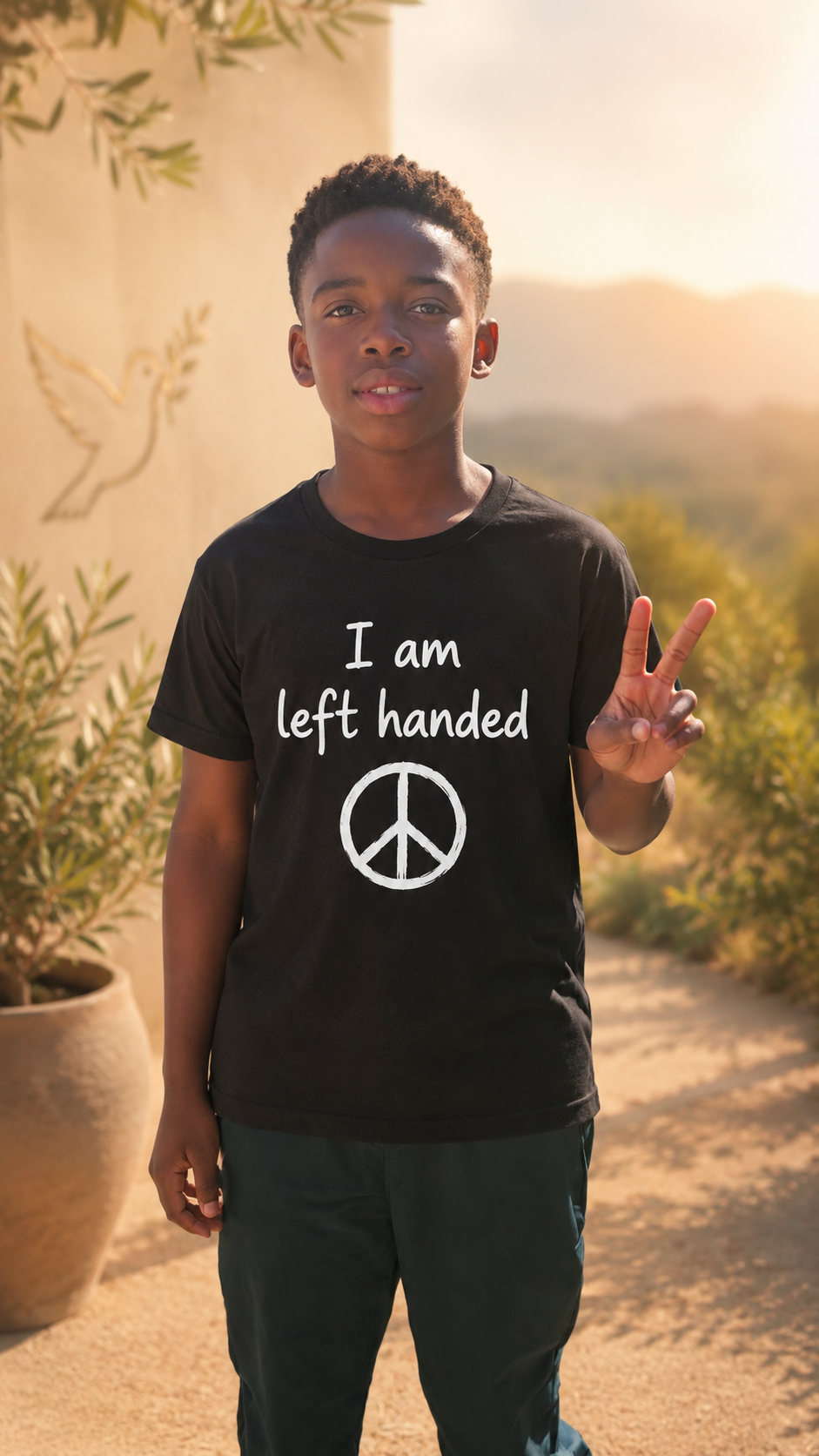
Up until that point, I considered my left-handedness as a matter of preference. In Siyabuswa, it dawned on me that other people saw it as a moral issue.
Looking back, it is clear to me that this is my introduction to how it feels to have a body which others think needs to be corrected.
The pressure was expressed through jokes, warnings, and corrections. I paused before passing things and shifting them to my right hand, not because its natural, but to avoid awkward situations.
It would take years of learning about peacebuilding and leadership for me to recognise what those childhood memories were trying to tell me.
Violence is not always loud. It shows its face when people are told indirectly that there is something wrong with who they are and that an essential part of who they are is unacceptable.
The tormenting was painful, but not the whole story. I realised how many spaces assumed that everyone was right-handed. Scissors, teaching aids and teacher examples assumed one body type. Left handers are expected to adjust.
Exclusion does not necessarily require a deliberate effort. Many forms of it are embedded in the norms of customs, and practices that seem so natural that they become unnoticed. Only those who deviate from the norms would be affected by it.
Those who corrected me did not mean any harm. My cousin was acting to protect others, while the old lady, who rejected my change was protecting herself from misfortune. These actions came from cultural myths not invented ones.
“Leadership is not about managing people or organisations but seeing what sort of exclusions have been normalised. It is about making sure there are places where one need not feel like apologising for or changing an integral part of who they are in order to be included.”
The awareness of this taught me that challenging exclusion not about condemning others. It is about questioning assumptions that are so habitual that we take them as truth.
Since I have felt what it is like to carry an invisible difference, I have learned to pay more attention to others shaped by unseen barriers. As a peacebuilder, I find myself posing different kinds of questions.
Who is left out?
Whose experience has been considered exceptional rather than an experience that belongs to our shared humanity?
What assumptions do we make about belonging?
Leadership is not about managing people or organisations but seeing what sort of exclusions have been normalised. It is about making sure there are places where one need not feel like apologising for or changing an integral part of who they are in order to be included.
This lesson goes much further than just being left-handed.
Every community determines, often without realising it, which bodies are considered normal and which bodies must explain themselves. Sometimes those differences involve disability, or language, or gender, or culture. Other times they reasons are less obvious. Yet the message that people receive, in subtle ways, is that belonging requires fitting in and is dependent on becoming more like everyone else.
But peace starts where that notion ends.
This journey starts with realisation that dignity is not what people earn through conformity. Dignity is an inherent quality of human beings.
Today, I no longer regard my left hand as something unusual, it reminds me of the source of my peace leadership
“Every time we confront a harmful assumption and affirm a person’s dignity without asking them to become somebody else, we engage in the quiet work of peacebuilding.”
It reminds me that peace is not built only through negotiations between governments or agreements signed after conflict. It is also built-in classrooms where every child feels seen. Around family tables who treat difference with curiosity rather than ridicule. In workplaces that question whose needs have been overlooked. In communities prepared to challenge their traditions without abandoning their humanity.
That same hand now reminds me, daily, that leadership begins with seeing the humanity in those whom society asks too readily to change.
My commitment transcends my left-handedness, it is a commitment to peace leadership in a society that reveals itself in how it treats those who do not fit in.
Every time we confront a harmful assumption and affirm a person's dignity without asking them to become somebody else, we engage in the quiet work of peacebuilding.
At times, peace starts from something as simple and ordinary as a hand.